

In this article
A phone assistant is useful when it gives a caller a reliable next step. Answering every ring is a weak success measure if the assistant books the wrong visit, invents a price or cannot pass an urgent issue to a person.
For a Canadian small business, start by defining the calls an AI receptionist may handle, the information it may collect and the decisions a person must make. This guide includes a worksheet and acceptance tests you can use before choosing a service.
Choose the job before choosing the voice
List the calls your team actually receives. Separate routine questions from requests that need judgement. A contractor might allow the assistant to record a request for an estimate while keeping price approval, emergency advice and promises about arrival times with a person.
| Possible job | Boundary to agree before launch | What to check |
|---|---|---|
| Answer opening-hours questions | Use an approved source with a named owner | Ask about a holiday or temporary closure |
| Take an enquiry after hours | Collect only the information needed for a callback | Confirm the request reaches the right inbox or queue |
| Request an appointment | Distinguish a request from a confirmed booking | Try an unavailable time and a duplicate request |
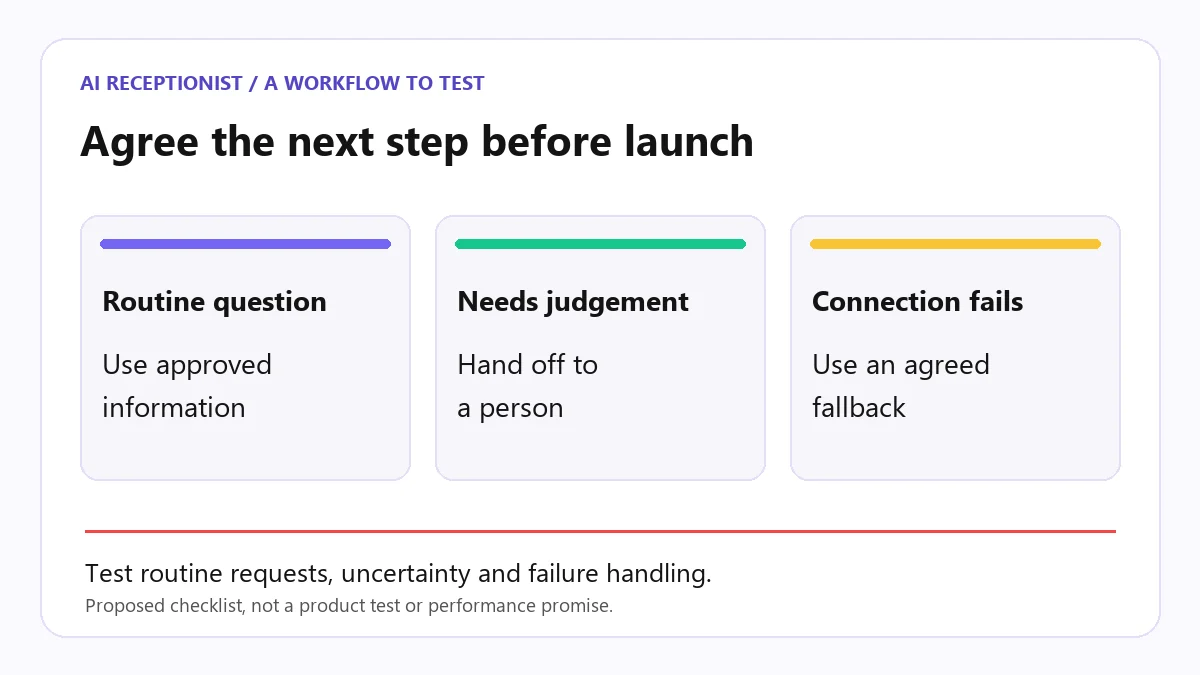
| Route an urgent or unfamiliar issue | Use a documented handoff; do not improvise professional advice | Test a failed transfer and the fallback message |
Do not assume a product can handle every row. Availability depends on the service, integrations and the configuration you agree.
Want to discuss your own call-handling workflow? Book a free AI opportunity call.
Compare costs using the same unit
Some providers price by calls, others by minutes, seats or usage. For example, Dialbox’s published pricing uses call allowances. Check its current terms directly before buying. A call allowance and a minute allowance are different things, so comparing headline prices alone can mislead.
Use your own call records to build a simple estimate. The following is a hypothetical calculation, not a Graby quote, a typical Canadian call volume or a promised return.
| Illustrative input | Calculation | Result |
|---|---|---|
| 120 eligible calls a month | 120 × 3 minutes per call | 360 minutes |
| 75% can follow the approved routine | 120 × 0.75 | 90 calls |
| Two minutes of staff work avoided on each routine call | 90 × 2 ÷ 60 | 3 staff hours |
| Illustrative staff cost of CAD $30 an hour | 3 × $30 | CAD $90 of staff time |
This example counts staff time only. It does not treat every answered call as a new customer. Subtract setup, subscription, overage, review and integration costs before describing savings. If the financial case depends on recovered bookings, record actual suitable enquiries and completed jobs rather than assuming every missed call was a lost sale.
Ask these questions before connecting your business number
- Who controls the phone number, routing rules and account if the service ends?
- What happens when a transfer, calendar connection or notification fails?
- Which languages have been tested with your actual enquiry types? Do not assume bilingual support from a product label.
- What data is collected, where is it processed, who can access it and when is it deleted?
- How are callers told what they are interacting with, and how can they reach a person?
- Which charges apply to short calls, transfers, spam and usage above the allowance?
For health, legal, financial or other sensitive enquiries, have the responsible professional review the workflow and applicable requirements before using real customer information. This checklist does not establish regulatory compliance.
Run a small acceptance test
Use clearly labelled test calls and synthetic details first. Assign a person to review the outcome. A polished demonstration is a starting point; your business needs evidence that its own workflow behaves as intended.
- Routine request: ask an approved question and check that the answer matches the current source.
- Uncertain request: ask for information outside the approved material. The assistant should acknowledge the limit and use the agreed handoff.
- Booking conflict: request an unavailable time. Check that a request is not presented as a confirmed appointment.
- Connection failure: make the transfer or integration unavailable in a safe test setup. Verify the fallback and notification.
- Correction: change a detail during the call. Check the final record rather than assuming the transcript was understood.
Record a pass or fail, the failure reason and the person responsible for correction. Do not launch until the agreed critical tests pass. Keep a simple rollback to the existing answering process.
Decide whether this is the first thing to automate
If most callers need complex judgement, a human answering service may fit better. If the main problem is that the website gives no clear next step, improve that first. BDC recommends choosing AI projects around a specific, measurable business need.
For related decisions, use our landing-page checklist and guide to measuring useful enquiries. Review a pilot using missed calls, suitable enquiries, handoff failures, staff review time and completed jobs. An answered call is not the same as a qualified lead.